Our 2025 Annual Impact and Highlights
0
Youth, families, and adults served through counseling and wellness workshops
0
Number of social and health benefits navigation support provided across 5 languages
0
Meals delivered for home-bound low-income seniors
0
Hours providing senior fall prevention classes
0
Hours of support services for seniors with complex needs
0
People reached through services, education, and outreach
0
School districts served for youth mental health
0
K-12 and community college schools served for mental health counseling
0
Hours dedicated to state and local advocacy for underserved communities’ needs
0
Partner organizations advocating with us for underserved communities’ needs
0
Bay Area immigrant and refugee residents participating in community safety survey
0
Number of languages spoken by immigrants and refugee residents participating in community safety survey
0
Dollars saved for low-income immigrant and refugee families and seniors through access to critical safety net services
0
Dollars generated for immigrant- and refugee-owned small businesses to boost local economy
0
Dollars restored from Alameda County funds for senior essential services through collaborative partnerships
MARU 2025 Annual Report
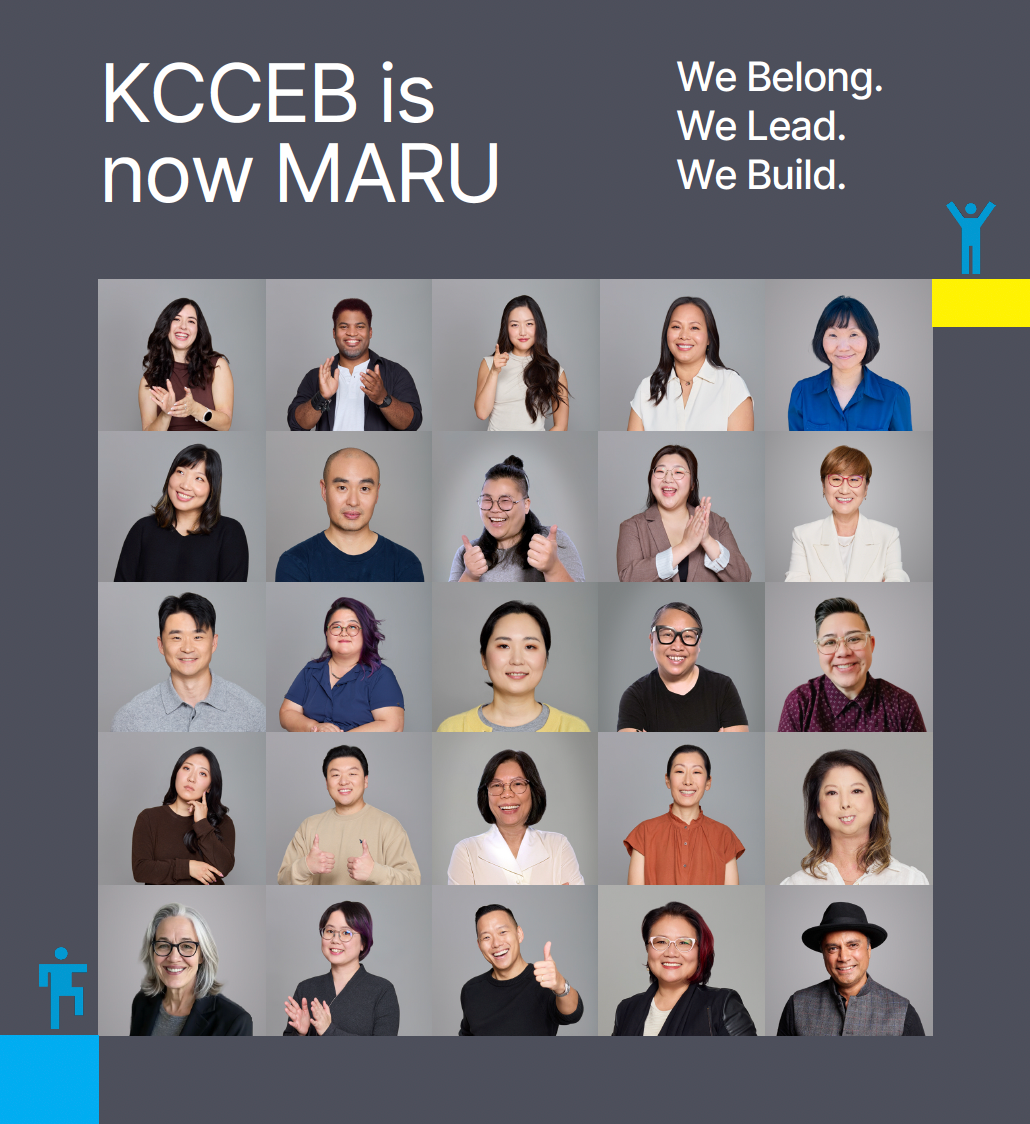
Over four decades, KCCEB has evolved from serving Oakland’s Korean seniors into a leading advocate for diverse Asian communities. MARU is a deeply meaningful Korean word that refers to an elevated wooden platform—an open gathering space where people come together for conversation, connection, and joy. It symbolizes connection, perspective, and collective progress. Our inaugural MARU Annual Report captures this evolution, highlights where we stand today, and outlines our vision for the future.
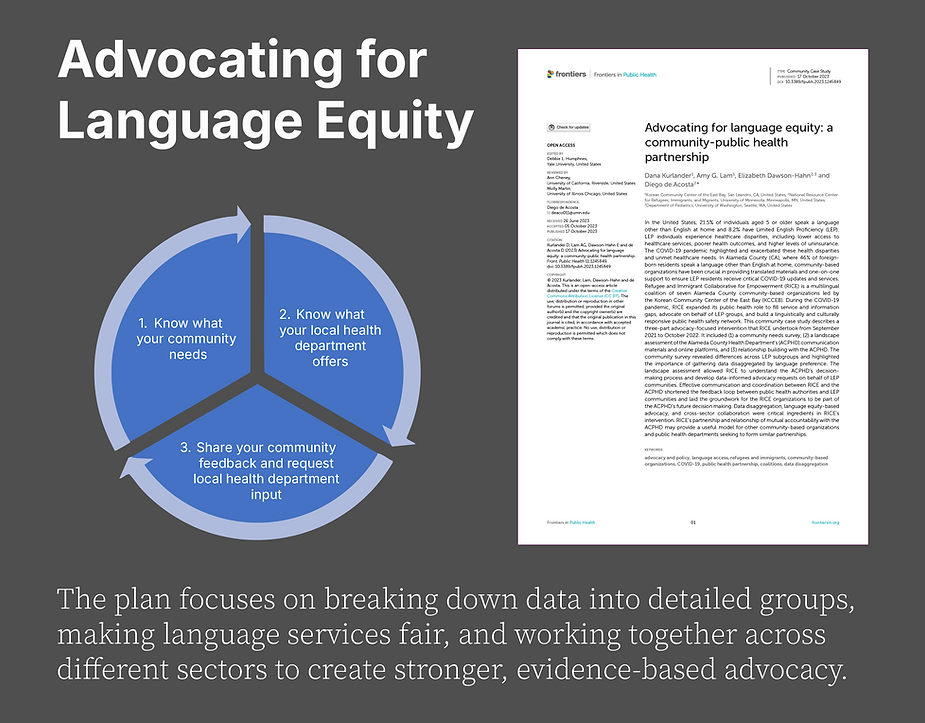
Advocating for Language Equity
A Community-Public Health Partnership
This case study, conducted by MARU and the Refugee Immigrant Collaborative for Empowerment (RICE), outlines a three-part advocacy intervention. The intervention emphasizes data disaggregation, language equity, and cross-sector collaboration to develop data-informed advocacy requests on behalf of Limited English Proficient (LEP) communities.
MARU thanks RICE partners and ACPHD for working together on this community case study.
KONA Bay Area
This study assessed the health and social needs of the Korean community in the Bay Area. This is the only disaggregated Korean population survey covering the top 5 Bay Area counties where the majority of Koreans reside.
KONA was a collaboration between MARU and the Health Research for Action (HRA) center at UC Berkeley.

Peer Review Journal Publication
Health and Healthcare Needs of Koreans in San Francisco Bay Area:
The Korean Needs Assessment (KONA) Project – Journal of Immigrant and Minority Health (2019) 21:1043–1051
Advocating for Language Equity: A Community-Public Health Partnership (2023)

Partnerships
Partnership is critical for advancing social justice and collective power for marginalized communities.
Maru participates in both direct service and advocacy collaboratives, partnering with groups that prioritize resource sharing, collective voice, direct impact, and community improvement. We are partners in the following collaboratives:
- Bay Area K-Coalition
- CA AA&NHPI Health Equity
- East Bay Immigrant and Refugee Forum (EBIRF)
- East Bay New American Campaign (EBNAC)
- Having Our Say (HOS)
- Health Justice Network
- Prevention Matters Collaborative
- Refugee Immigrant Collaborative for Empowerment (RICE)
- Senior Services Collaborative
- Stop the Hate Bay Area Alameda County Tobacco Control Coalition
- Contra Costa County & Healthy Richmond API COVID Workgroup
- Young Asian American Storytellers! (YAAS)